
Scaling Without Losing Your Soul: Leadership Lessons from a Six-Location Behavioral Health Organization
Growth in behavioral health usually gets framed as a math problem — more locations, more beds, more staff. The organizations that scale well treat it as a culture problem first. Todd Stumbo leads six locations, roughly 205 staff, and close to 300 beds, and his answer for what holds it together is people, not process.
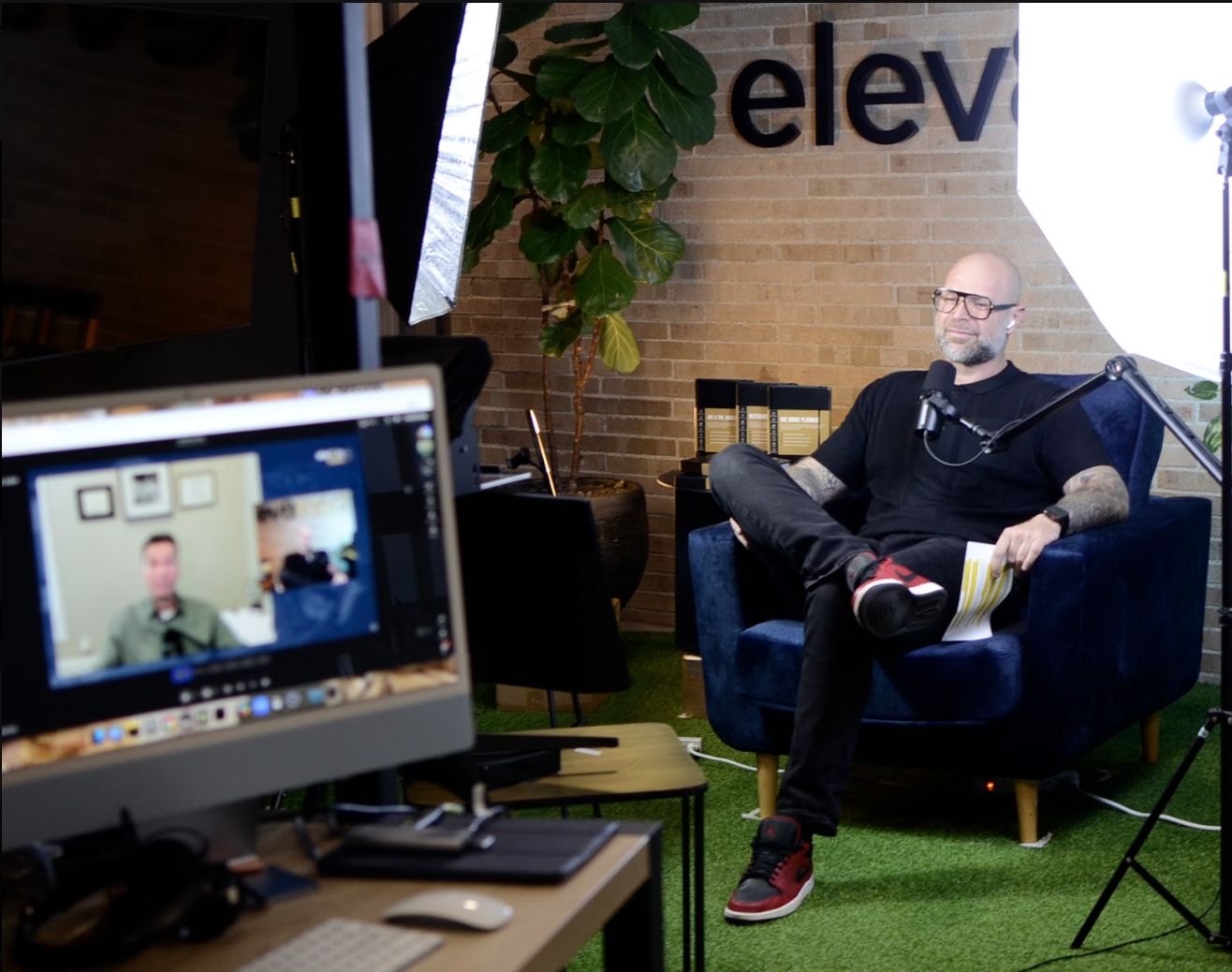
In this episode of The elev8.io Podcast, Gary Garth sits down with Todd Stumbo, Chief Executive Officer of Thoroughbred Wellness and Recovery, to unpack hiring for purpose over a paycheck, why vulnerability is a leadership strength rather than a liability, what John Maxwell's "Law of the Lid" means for a growing organization, and why margin and mission don't have to be treated as opposites.
Key Takeaways
- Hire for purpose, not for a paycheck. Across six locations, roughly 205 staff, and close to 300 beds, Todd screens first for a sense of purpose. In an organization this size, culture is carried by the people you let in the door — not by a values statement on the wall.
- Vulnerability is a leadership credential, not a liability. Todd connects his leadership philosophy directly to his own recovery journey and continuous personal growth, including openly discussing his divorce. Leaders who model that give their teams permission to be honest about what is actually happening.
- Tenure is not leadership potential. Promoting the longest-serving person is the default mistake. Todd walks through John Maxwell’s "Law of the Lid" — an organization can only rise to the level of its leadership — and the nurse-to-hospitality story that shows what recognizing real potential looks like in practice.
- Servant leadership: serve the team so the team can serve clients. Todd’s model puts the leader underneath the team rather than above it. The job is coaching, teaching, and helping people think for themselves — not issuing decisions. The framework he credits is The Servant by James Hunter, the book he says he hung his entire career on.
- Margin and mission are not opposites. Todd warns against chasing margin at the expense of mission, but rejects the idea that you must pick one. He is optimistic about AI and technology specifically where they cut administrative burden and give clinicians more time with patients.
“Culture is not the wrapping paper around the product. Culture is the product. We don't sell a widget — we sell human beings showing up for other human beings on the worst days of their life, and you can't fake that.”— Todd Stumbo, CEO of Thoroughbred Wellness and Recovery
Episode Chapters
- 00:00Intro: scaling behavioral health without losing culture
- 01:29What Todd is really known for as a leader
- 03:18Why culture matters more than anything else
- 06:26Vulnerability as a leadership strength - Todd's divorce and recovery story
- 12:08Hiring for purpose vs. just a paycheck
- 16:12John Maxwell's "Law of the Lid" and leadership ceilings
- 20:15Promoting on tenure vs. true leadership potential (the nurse-to-hospitality story)
- 25:00Biggest concerns and hopes for the future of behavioral health (AI, outcomes-based care)
- 33:50The #1 leadership lesson: servant leadership
Frequently Asked Questions
What does "scaling without losing your soul" actually mean for a behavioral health organization?
It means growing headcount, locations, and beds without letting the culture that made the organization work get diluted along the way. Todd's position is that culture isn't packaging around the service — it is the service. As he puts it, "We don't sell a widget. We sell human beings showing up for other human beings on the worst days of their life." At six locations, 205 staff, and close to 300 beds, the practical work of scaling is making sure that what happens when leadership isn't in the room stays the same in every building.
How do you hire for purpose instead of hiring someone who just wants a paycheck?
Todd's answer is that you can't fake purpose over a long stretch, because purpose shows up in the unglamorous moments when nobody is watching and there's no overtime in it — asking about the client who left against medical advice, staying late, sitting at a bedside. He's explicit that needing a paycheck is not the enemy and that the industry is wrong to treat helping people and earning money as opposed; the distinction is whether the paycheck is the ceiling or the floor. His favorite interview question is "What is it in life that really fires you up?" rather than the standard "describe a difficult situation," because passion-driven people rarely describe this work as hard.
What is John Maxwell's Law of the Lid, and why does it matter more in behavioral health?
The Law of the Lid holds that a leader's ability is the ceiling on the organization's effectiveness — a team can only rise as high as its leadership allows. Todd's point is that in most businesses that's a productivity or revenue conversation, but in behavioral health the lid on the leader becomes the lid on client outcomes, people's recovery, and sometimes people's survival. His shorthand: if a leader caps out at a 6 out of 10, the best clinical staff will operate at a 5 or less, because nobody at an 8 wants to follow a 6.
Why is promoting on tenure a mistake, and what should you promote on instead?
Todd calls promoting on tenure alone one of the most common and most damaging mistakes in the field — and says he has made it himself. Taking your best clinician and making them a leader because they've been there longest risks a double loss: you remove them from the work they're gifted at, and you install a leader who was never developed for the role. You end up with a frustrated supervisor and a hole where your best counselor used to be. His alternative is to honor tenure with recognition, expertise tracks, mentorship roles, and pay — and to base leadership promotions on character, influence, and capability instead.
What is servant leadership in a treatment setting, and how is it different from the poster version?
Todd describes it as literally flipping the pyramid: a leader's job is not to be served by the team, but to serve the team so the team can serve the client. He credits the book The Servant by James Hunter as the framework he hung his career on, and has had many of his executives read it. Critically, he warns that serving the wrong way creates dependence — if you always supply the answer, staff will keep coming to you for it. His approach is to coach, teach, and provoke people to think for themselves, responding to a weak answer with "That's a great idea, but what's another way we could do this?"
How should leaders think about the tension between margin and mission?
Todd rejects the framing that they're opposites. His concern is the commoditization and financialization of care — as more capital flows in, there's real pressure to chase margins over mission, and organizations get designed to optimize for census and billing rather than outcomes. But he's equally direct that putting care entirely ahead of profit means you shut down. His practical safeguard is governance: without board members, mentors, partners, and directors who make decisions as a group, a leader will make selfish decisions.
Why is Todd optimistic about AI in behavioral health, and what is the catch?
His optimism is specific: technology in the hands of a clinician gives time back. AI that absorbs administrative burden means more clinician time with guests, alongside better measurement-based care and advances in neuroscience. He argues the stigma around using AI will simply leave organizations behind in an industry already too far behind. The catch he names is HIPAA — AI vendors are largely building for businesses that don't carry HIPAA obligations, so behavioral health providers have to be deliberate about how they use these tools.
Why does Todd think most outcome data in the industry is unreliable?
He tells the story from the other side of it: after leaving a treatment center, he got the standard follow-up calls at 30, 60, and 90 days, six months, nine months, and a year, and every one came down to "Are you still sober?" He was high while answering that he was doing great. Phone-based self-report isn't a real outcome, and it's being marketed to insurers and families as if it were. What he considers legitimate is hard data an organization actually controls — program completion, conversion into aftercare, and continued alumni involvement. His open question for the field is how to make outcome data concrete enough that bad actors can't manipulate it.
Full Transcript
Cleaned and speaker-labeled. Jump to any moment via the chapters above, or open the complete transcript below.
Read the full transcript9 chapters · ~39 min
Intro: scaling behavioral health without losing culture00:00
Gary Garth: Hi everyone, welcome back to The elev8.io Podcast, the thought leadership platform designed for behavioral health executives navigating growth, innovation, and impact. Today we're exploring one of the biggest leadership challenges in behavioral healthcare: how do you scale without losing your soul? As more organizations grow, maintaining a strong culture becomes harder. More locations and more people create greater complexity, making intentional leadership more important than ever.
Gary Garth: So that raises a few questions. How do you preserve your leadership culture while scaling? How do you develop leaders who inspire rather than simply manage? And what separates organizations that grow sustainably from those that lose their identity? Joining us to answer these questions is Todd Stumbo, Chief Executive Officer at Thoroughbred Wellness and Recovery, a six-location behavioral health organization built on servant leadership, people development, and a culture-first principle. Drawing on nearly two decades of experience in clinical, operational, and executive leadership, Todd believes the greatest competitive advantage isn't a treatment model — it's the people and the culture behind it. So if you're a CEO, a founder, an executive director, a clinical leader, or a behavioral health executive looking to grow your organization while protecting the culture that made it successful in the first place, today's conversation is for you. Todd, welcome to the podcast.
What Todd is really known for as a leader01:29
Todd Stumbo: Hey, thank you. I'm happy to have this conversation.
Gary Garth: Let me start with this. Looking on paper, you've accumulated more certifications than most people do in a lifetime. But I'm curious — when we're talking about leadership and people, if I were to ask your team what Todd Stumbo is really known for, what do you think they would say?
Todd Stumbo: What I'd hope they would say is that I truly see people. That I believe in people before they believe in themselves a lot of times. And by that same token, I push people to be much better versions of themselves than maybe they thought possible. That can come off as holding a pretty high standard. Because I know in my own life, in my own experience, if it wasn't for people around me who believed in me before I believed in myself, I wouldn't have grown as much as I have. So I think they would say, "He was real with us. He never asked us to do anything he wasn't willing to do, and he saw who we really were." That's what I would hope they would say.
Why culture matters more than anything else03:18
Gary Garth: When we had our initial conversation, you brought up that in your viewpoint, culture matters more than anything else within your organization. Why is that?
Todd Stumbo: If you look at our field and think about culture, it's not really the wrapping paper around the product. Culture is the product. We don't sell a widget. We sell human beings showing up for other human beings on the worst days of their life, and you can't fake that. You can't mandate it from a policy manual. And here's the thing I think people miss: the people we serve have a radar for authenticity that most of us can't even imagine. Folks in early recovery have been lied to. They lie a lot themselves to survive. They can genuinely feel the difference between a staff member who is glad they're alive today and one who's just running a shift.
Todd Stumbo: That feeling, to me, is culture. It's what happens when leadership isn't in the room, and whatever your culture actually is, it leaks straight into your client care. You can have the best clinical model in the state, but if the culture is toxic, the model is not going to save you. So for us, the culture is the active ingredient.
Gary Garth: After nearly two decades in this industry, what elements of leadership have surprised you the most?
Vulnerability as a leadership strength - Todd's divorce and recovery story06:26
Todd Stumbo: The biggest surprise was learning that leadership had almost nothing to do with me having answers. Early on, like a lot of young leaders, I thought my job was to be the smartest and most capable person in the room, to have the plan. What I learned is that the higher you go, the less you actually do with your own hands, and the more your only real job is to develop other people. Your output stops being your work and starts being their growth.
Todd Stumbo: The second surprise was even more personal. I'd spent years thinking recovery was something I had to manage carefully around my professional life — keep it in its lane, because you get told that all the time: don't let your recovery get into your work. What I discovered is that the very thing I thought could have been my biggest liability turned into my greatest leadership asset. When I come to people from a place of brokenness instead of hiding it, people tend to lean in. That vulnerability isn't the opposite of strength. It's the doorway to trust.
Gary Garth: Can you give an example of what that vulnerability looks like where it actually translated into a strength?
Todd Stumbo: For me — about 12 years sober, I had just been named CEO of a facility, I'm starting graduate college after 20 years, and all of a sudden my wife at the time walks in and says she wants a divorce. My world starts to implode, because the script running in my head that I didn't know was there, subconsciously, was: get a divorce, you're going to lose everything, die, and go to hell. That subconscious program got instilled in me at a young age.
Todd Stumbo: So I start running around as this leader in a panic. I'm working out three times a day. I'm basically running from experiencing God. And I go to Onsite Foundation, a three-and-a-half-day leadership experiential, and that's where I actually found out what growth and sobriety really are — you don't ever achieve it, it's a constant process you go through. In those three and a half days I sat and watched all these other men expose themselves, get vulnerable, talk about their struggles. In that final moment I had an opportunity to get up there, and in 45 minutes my entire life changed in the relationship I had with what I choose to call a higher power.
Todd Stumbo: I brought that back, and ever since then I teach it with the staff. I use it in trainings and lectures. Though my life looked like it was all put together on the outside, on the inside I still had stories being told that were causing self-destruction. So constant growth, no matter what position you're in — in a facility, a company, a life — is vital to your experience with the people around you. Now obviously you have to know where to share what. I'm not just emotionally vomiting on people. But I can sit with a staff member who's struggling with something and relate to it by looking at my own life. I don't just sit and shake a finger and tell them, "Well, you need to be doing this." I can literally look at them and say, "Hey, I totally understand what that feels like."
Gary Garth: As somebody who struggled with addiction myself, listening to your videos, it's very clear you're speaking from experience and making yourself vulnerable. I imagine from a patient acquisition and branding standpoint that's been advantageous as well. Was that intentional, or did it happen intuitively?
Todd Stumbo: I didn't want to video myself and put it on social media. I was terrified, because you see the critics, you see the harsh language that gets said about people. Over time what I realized is that truly putting myself out there — sharing the things that altered my life in a dramatic way and saying, "Look, I've had a problem, and here's what I think about it" — it takes the risk. That was the piece I had to get over: what if my vulnerability and my fear of sharing impacts the one person who is on the edge of their bed contemplating suicide, and they choose not to? That fear, it's worth taking that chance.
Todd Stumbo: I actually don't do it for marketing, I do it because I feel called to do it. The current series I'm doing is 111 days on how to be a coffee bean. I committed to doing 111 days straight, and that is a difficult thing — to shoot a video every day. I purposefully did not pre-shoot a bunch of videos. It's literally me every day having to remember right before I get in bed, "Oh man, I forgot to shoot the video, I've got to go do it." The reason I did that was not only to share the message, but to show discipline. There are days I don't want to do it. But it's a discipline, and that's what spirituality really is for me — a discipline you have to learn to practice.
Hiring for purpose vs. just a paycheck12:08
Gary Garth: So you're at six locations, close to 300 beds. You must have a very large staff.
Todd Stumbo: 205 staff, yep.
Gary Garth: That's a lot of people to embed a culture into. When bringing people on at this point, what do you look for in terms of whether they're a good fit for the culture, versus just looking for a paycheck?
Todd Stumbo: Time tells the truth. You can't fake purpose over a long stretch, because purpose shows up in the unglamorous moments when nobody's watching and there's no overtime in it. The person who's purpose-driven asks about the client who left against medical advice. They stay late because it matters. They're sitting at the bedside of a person who's struggling. They do the small, invisible right things that nobody will ever put in a performance review.
Todd Stumbo: And I want to be careful here, because everybody needs a paycheck and that's not the enemy. Our industry frowns on talking about helping people and money in the same breath, and to me that's inappropriate — people who do work that helps people should be paid for it, just like a doctor. I've never looked down on somebody needing to provide for their family. The distinction isn't money versus no money. It's whether the paycheck is the ceiling or the floor.
Todd Stumbo: Part of my job as a leader is to help people connect their daily work to a purpose they may not have found yet. I've seen people come in and take it as a job, and what they find is a passion. Some folks aren't purposeless — they just haven't been shown where their work matters and makes a difference. That's a leadership opportunity for me. It's not a disqualifier.
John Maxwell's "Law of the Lid" and leadership ceilings16:12
Todd Stumbo: When I interview people, especially leaders, one of my favorite questions is: what is it in life that really fires you up? A lot of people ask the reverse question — "What's one difficult situation you faced and how did you deal with it?" The problem with that question is that passion-driven people will rarely say anything about our industry, because we love this work so much that nothing I've ever done in it feels hard. But if you ask what fires me up: I love to go in and run a group, teach people, sit with people, coach people. I love to deal with crisis. That's where you start to see the passion come out. Now, if they say, "Oh, I love to go home, relax, and binge on Netflix" — nothing against that, but you might not be my person. We also use a DiSC profile process to get clarification on what people are good at and what their personality traits are.
Gary Garth: During our conversation you referenced different books and frameworks you hold near and dear — among others, John Maxwell. Can you expand on that?
Todd Stumbo: One of my favorite things John Maxwell talks about is called the Law of the Lid. What he says is that leadership ability is the lid on the organization's effectiveness. Your team can only rise as high as your leadership allows. In most businesses that's a productivity or revenue conversation. In ours, the stakes are entirely different, because the lid on the leader becomes the lid on client outcomes, people's recovery, sometimes people's survival.
Todd Stumbo: So a program can only serve its clients as well as the team is led. If I as a leader cap out at a 6 out of 10, my best clinical workers are going to be at a 5 or less. Because nobody at an 8 wants to follow a 6. This goes back to my experience of trying to grow and constantly be vulnerable. If I don't constantly improve my lid and move it up, the people under me can't move their lid up either. You raise the ceiling by example, not from a chair where you're setting a standard you don't even measure up to. Using something like the Law of the Lid matters because I'm not just developing leaders — I'm raising the ceiling on how well people grow and heal.
Gary Garth: It's incredibly important that leadership puts no limit on what the team can do. It's well known in other industries that B players attract C players and A players attract A players — unless you maintain it. When you're assessing who the next leader for a department is, it sounds like seniority is not the primary driver. What qualities do you look for?
Todd Stumbo: First of all, I had this backwards early in my career. Promoting on tenure alone is one of the most common — and most damaging — mistakes I've seen in our field, and I've done it. So I'm not sitting here shaming anybody. Tenure is not leadership. They're completely different sets of skills. When you take your best clinician and make them a leader simply because they've been there the longest, you risk a double loss: you remove your greatest clinician from the work they're gifted at, and you install them as a leader who was never really developed for that role. Now you've got a frustrated supervisor and a hole where your best counselor used to be.
Todd Stumbo: That doesn't mean tenure means nothing. Experience is valuable and absolutely deserves to be honored — but you honor it with recognition, with expertise tracks, with mentorship roles, and with pay. Not by defaulting somebody into leadership they didn't choose and weren't built for. Leadership has to be based on character, influence, and capability. Time served is a number. Leadership is more of a calling. The two sometimes overlap, but not necessarily. Seniority is great, but there's always a cap on seniority.
Promoting on tenure vs. true leadership potential (the nurse-to-hospitality story)20:15
Gary Garth: You told me a story about moving a nurse into hospitality after helping him discover his real purpose. Can you expand on that?
Todd Stumbo: It's probably one of my favorite stories in my 20-year career. This guy worked for me at another facility. Phenomenal guy, probably one of the most competent nurses I've ever met. He was an LPN, but he had been trained as an RN, studied as an RN, and he failed the RN exam. It rattled him. It put him in a state where he wrote it off — it's not his thing, he's not going to do it again. He stayed in a box: "Where does my life go now? I dedicated all this time, all this money into becoming this thing that I'm never going to attempt again because I failed at it."
Todd Stumbo: So when we started Thoroughbred, I recruited him. He came over, and I quickly saw the unhappiness follow him. He's in our nurses' station doing a great job taking care of our guests, but I could see the unrest. One night we sit down — I'm actually leaving, packing up, ready to go to the gym — and he comes into my office with two other people just to chitchat. I still get chills talking about it. It was like God sat down in the room. For some reason I put my bags down and engaged him in conversation.
Todd Stumbo: It ended with me saying, "Look man, here's the deal. I'm going to give you three months to study and then test for this RN again, and if you don't, you're fired. There's not a question about it. And I don't care if you pass, I don't care if you fail — none of that matters. What matters to me is that you look me in the eyes right now and say you will give your very best over the next three months to study and train yourself to go take this test again. The outcome doesn't matter. It's about process. And if you do that, and I believe you did your very best, then I will pull you out of the nurses' station and give you a role that really lights you up."
Todd Stumbo: Over three months he downloaded apps, he studied, all this kind of stuff. He goes and takes that test and he passes it. He becomes an RN — the dream he always had. And the next day was the last day he worked as a nurse. We moved him into hospitality as the director over our guest services. Now he gets to roam around. He's not stuck in one spot. He loves to move, he loves to work on things, he loves to create. He's in his lane.
Todd Stumbo: So when I look at leadership, it's being able to identify where people are good at — but also not selling it short and making them hold to a responsibility they committed to. I see so many times people come in and take a job as a tech, and three months in they say, "Well, I don't really like this, I think I'd do better in admissions." And you move them to admissions. Then three months into that, same thing. So as a leader my job is to hold people accountable. We have a policy that says you can't jump jobs — once you get hired into one, you have to stay in it for a minimum of six months, and then to transfer somewhere else multiple directors have to be involved and approve.
Todd Stumbo: It's one of my favorite stories to teach. We took a guy and saw what he was capable of doing. He didn't believe in himself, and I put a vise on him that was so severe — you either do this or you're fired — that it forced him. And it doesn't work for everybody, so don't get me wrong. With him, I knew him well enough that this was going to light a fire under him. And now he runs our day-to-day guest services. Whether it's 2:00 and there are cookies to put out, or a light bulb's out, he handles all of it.
Biggest concerns and hopes for the future of behavioral health (AI, outcomes-based care)25:00
Gary Garth: Let's shift gears. Given your two decades in the industry — what concerns you the most about the future of behavioral health, and what excites you the most?
Todd Stumbo: The first thing that concerns me the most is the commoditization and financialization of care. As more capital flows into the space, there's real pressure for people to chase margins over mission. And there's nothing wrong with both — but when you chase one over the other is when companies become unhealthy. They're designed to optimize for census and billing instead of the outcomes. I'm not saying one is better than the other. What I'm saying is they have to be mixed together. It has to be a cog that moves the wheel all together.
Todd Stumbo: And reimbursements from insurance companies keep getting tighter, which squeezes the staff and culture that make everything work. Every bad actor out there who treats this as an extraction business doesn't just hurt themselves — they hurt their own clients. They erode trust with the public, and they invite the kind of blunt over-regulation that punishes good operators. My deepest concern is that we lose the human element in the name of scale.
Todd Stumbo: So what I've tried to do with Thoroughbred and our mother company, Alta Point, is show that you can scale. We've got close to 300 beds, 205 staff, six locations. And you can do all that and provide top-level care at the same time while being profitable. There's nothing wrong with all that — it's when one outweighs the other. If you put profit ahead of care, you're not doing the work you should do. If you put care completely ahead of profit, you shut down. You have to find balance in between.
Todd Stumbo: Here's the danger in our industry: if you don't have board members — or whatever you want to call the people you lean on for advice — you're going to make some selfish decisions. For me, having mentors, having partners, having directors in the facilities where we come together and make decisions as a team keeps us all in check. We're not making a decision based on what I want or what I think I need. It's what's best for the organization, what's best for the clients and guests we're taking care of. Instead of, "Hey, this is my company, my business, I'm going to do what I want."
Todd Stumbo: Now, on the flip side, that same era that worries me also has me genuinely hopeful. If you think about technology done right, in the hands of a clinician, they get their time back. Building with these AI tools to absorb administrative burden — and some clinical burden — gives more time back to the clinicians with the guests we have. We're getting better measurement-based care out of that. Neuroscience is advancing. All of that is starting to come online.
Todd Stumbo: And the stigma of using technology — "Oh, are you really doing good work if you're using all this AI?" — I just think people are going to get left behind. Our industry is already too far behind as it is. We need to be welcoming these technologies. I'll be transparent: my daughters don't communicate verbally, they communicate on text. They can sit across the room and be texting.
Gary Garth: How old are your daughters?
Todd Stumbo: 16 and 12. One of the things I did was create an app that I shared with both of them. It's all of my knowledge in human services, everything I'd done in leadership that I had saved on my computer — I dumped it in and had it create an app where they can ask it any question. Like, "I'm struggling with a friend that's gossiping about me," and it spits out the type of leadership skill or technique to use, along with positive psychology methods. So they don't have to come to me — they can literally have me in their pocket. And I'm not being arrogant. What I'm trying to say is it was the way I had to learn to communicate with my own daughters — through technology.
Todd Stumbo: So I think we as a field have to welcome this and look at how we professionalize it, how we make it safe. The problem we all have right now with AI is that HIPAA compliance is where companies are falling short, because they're not targeting us — they're targeting other businesses that don't require HIPAA. So you've got to be careful with how you use it. But that's what I'm most excited about, is where it can take us.
Gary Garth: I just came back from the recovery.com Marketing Summit, and it has been a conversation at previous conferences as well. Do you think there's a world in the future where profitability is directly correlated with outcomes — where better outcomes yield increased reimbursement rates, or payer contract negotiations are tied directly to clinical outcomes?
Todd Stumbo: You're already starting to see some of that. The problem with it is: are the outcomes real? For example, I went to a treatment center — I'm not going to name it. I left. They called me at 30 days, 60 days, 90 days, six months, nine months, a year. Every time they called they'd ask a few questions, but it came down to, "Are you still sober?" And I'm high as a kite going, "Oh yeah, yeah, no, I'm doing great." So that's not a real outcome, and people are marketing that to insurance companies and families.
Todd Stumbo: The only thing I can tell a family is hard data — how many people actually complete and graduate our program, and then how many convert into an aftercare program and continue on. Then I can give data on how many stayed in our alumni circle and stayed involved. Then we've got legitimate data. I can't make a phone call and just ask, because we lie. That's what active addicts and alcoholics do. We lie and don't tell the truth, and the shame of me saying, "You know what, I'm not doing well" — that's rare. So I think outcomes-based is the way to go. The question I have is how you get legitimate data with it not being manipulated by the wrong players. That's going to happen, and how do we make the efficacy of it concrete and hard rock, where nobody can lie about it? That's going to be the tough piece.
Gary Garth: I'm 100% on the same page. There's very little validation and credibility in asking a few questions over a phone call and using that as the baseline for outcome studies. Todd, we're coming up on the end of our conversation. If you had to select one leadership principle that has helped you the most over the last 20 years, which would it be and why?
The #1 leadership lesson: servant leadership33:50
Todd Stumbo: 100%, servant leadership. And I mean it literally — not as a poster in the break room. It literally is flipping the pyramid. Your job as a leader is not to be served by your team. It's to serve them so they can serve the client or guest.
Todd Stumbo: For me that got shaped by a book called The Servant by James Hunter. It's one of the most powerful books I've read — I've had a lot of our executives read it. That's the one I hung my entire career on. It taught me that authority is built by serving, and that's one of the deepest leadership skills in the world. Because when you serve, you experience a level of empathy and hearing people that you won't get anywhere else. You won't get it sitting in a room in a meeting. You get it when you're running a shift with a tech and you're seeing what they're going through.
Todd Stumbo: If every executive did just one thing, it would be this: take care of people as people and not as resources. We hear it all the time, HR people talking about "people are our best resources." They're people. They're not resources. Here's the chain reaction: leaders who serve their staff create staff who serve clients, and clients who are served well. You can't give your team what you don't give them first. If you're not serving them, they're not going to go serve anybody else. The speed and the heart of the whole organization is set by the leader.
Todd Stumbo: So serve first. Get out of the chair. Get out of your office. Go get your hands dirty and get in the mud. And I'm not saying let it all fall on you. When I serve, I will be with the techs, I will be with a counselor, and I'll look at them and say, "Hey, I don't know — what do you think is best to do in this situation?" Because if you serve in the wrong way, they'll constantly look to you for the answer. The goal is to be there, coach, teach, and provoke them to think for themselves. When they come up with the wrong answer, I'll literally look at them and say, "Hey, that's a great idea, but what's another way we could probably do this?" And it causes them to think again.
Gary Garth: Thanks for sharing that — I'm definitely adding that to my reading list, and we'll make sure to put it in the show notes. Todd, if anybody wants to get ahold of you, where can they find more information?
Todd Stumbo: They can go to any of the websites — thoroughbredbhc.com and mosaicbhc.com are the two major ones. They can look me up on Facebook, Instagram, or LinkedIn. Probably social media is the easiest way to engage me. DM me on there. Search my name and I pop up.
Gary Garth: Fantastic. Todd, thank you so much again for being on the podcast. It's been a pleasure, and please keep up the good work.
Todd Stumbo: Thank you to you and your team for the work you're doing to get a message out that I think so many people need to hear in our industry. You taking the time to push that gas pedal down and say, "Let me go out and find leaders that care" — that's the way this whole thing changes. You start by one, and you're being that one for us.
About the Guest
Todd Stumbo — Thoroughbred Wellness and Recovery
Todd Stumbo is the Chief Executive Officer of Thoroughbred Wellness and Recovery, a behavioral health organization spanning six locations with roughly 205 staff and close to 300 beds. He holds an MBA in Healthcare Management alongside addiction counseling, relapse prevention, and human services credentials, and previously led Blue Ridge Mountain Recovery Center. Todd is open about his own recovery journey and draws on it directly in how he leads — building a culture around purpose, vulnerability, and servant leadership.
Connect on LinkedInAbout the Host
Gary Garth
Founder & CEO, elev8.io
Gary Garth is the Founder & CEO of elev8.io, where he helps behavioral health organizations achieve full census through integrated marketing, admissions, and technology-driven growth systems. With more than a decade of experience working alongside Google, Microsoft, and high-growth technology companies, Gary has built and implemented scalable growth frameworks now used by 55+ treatment centers across the United States to drive admissions and operational efficiency. Read more
Connect on LinkedInRelated from elev8.io
Curious what your true cost per admission is?
Run your numbers with our Behavioral Health Growth Calculator,
or talk strategy with our team.